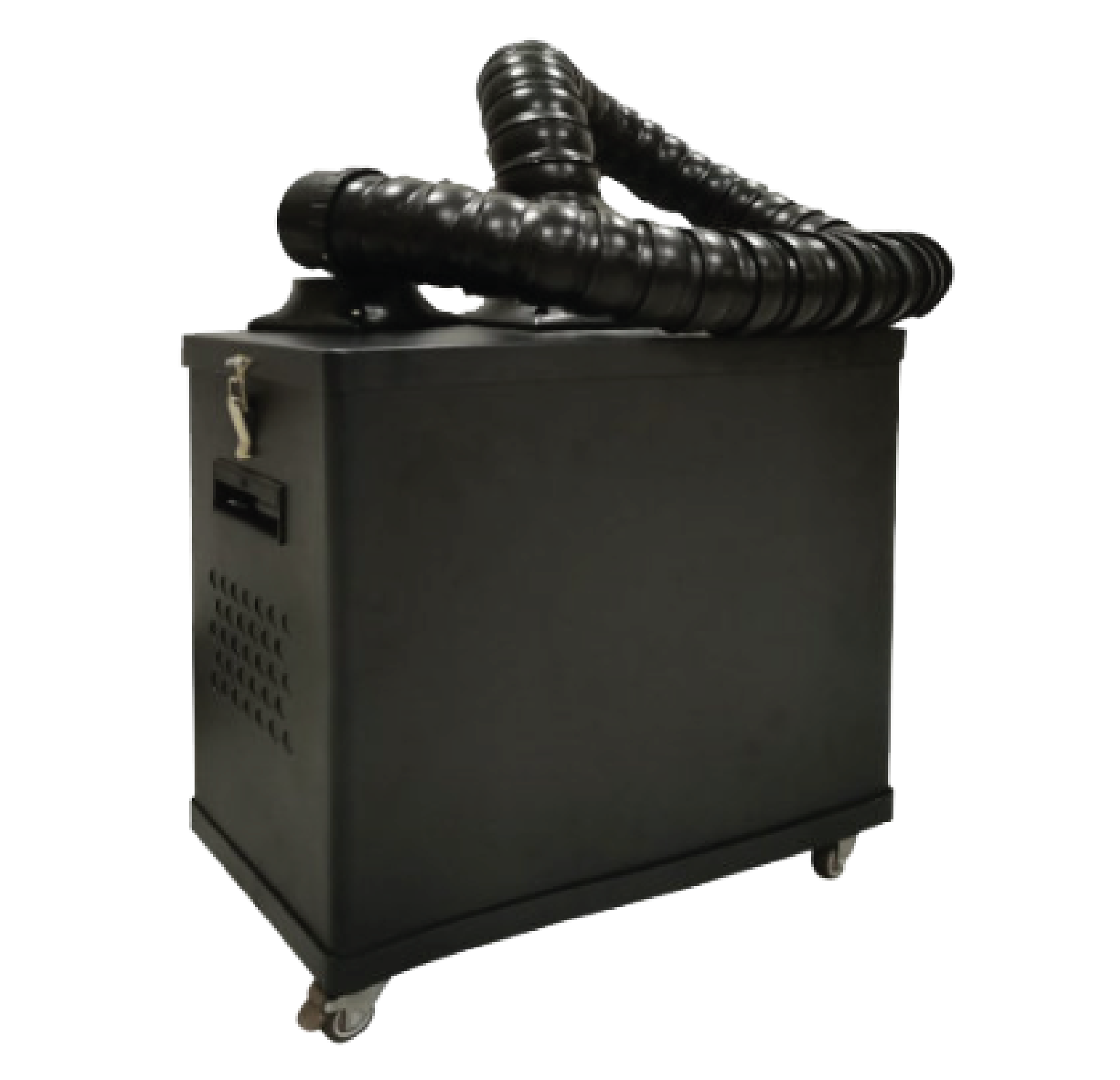
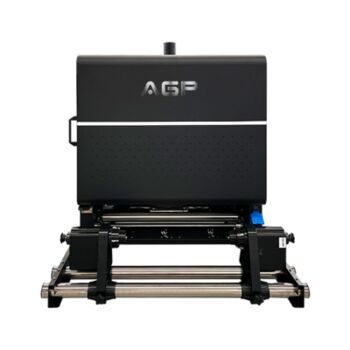
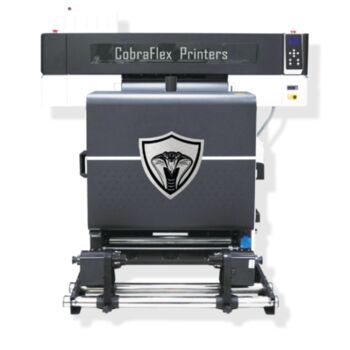
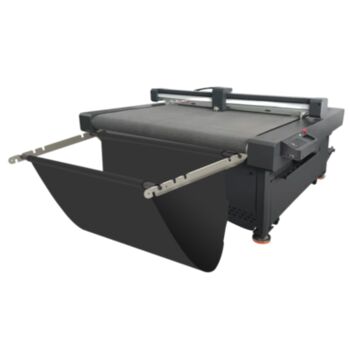
From standalone printers to complete packages with built-in shakers and dryers — CobraFlex DTF printers, air scrubber purifiers, and flatbed transfer cutters from Buckets of Ink in Tempe, AZ.
From DuPont DTF inks, film, and adhesive powder to CobraFlex DTF printers and heat presses — every supply and part your transfer operation runs on, in stock in Tempe, AZ.
Direct to Film (DTF) Printing: Vibrant, Versatile, and Built for Performance
The Power of the DTF Printing Process
Direct to Film (DTF) printing has quickly become the leading method in custom garment decoration. Unlike traditional screen printing or direct-to-garment (DTG) techniques, Best DTF Ink allows for bold, full-color prints on a wide variety of fabrics—including cotton, polyester, blends, and more—without the need for pre-treatment. The process is simple, efficient, and remarkably consistent, making it a go-to for decorators seeking fast, flexible, and high-quality results. DTF begins by printing a mirrored image directly onto a special PET film using DTF pigment inks. A layer of adhesive powder is then applied to the wet ink. This powdered film is cured through a heat process and can be stored or immediately transferred onto a garment using a heat press. The result is a soft, stretchable, and long-lasting print with excellent color vibrancy and durability.
Why CobraFlex Printers Lead the DTF Market
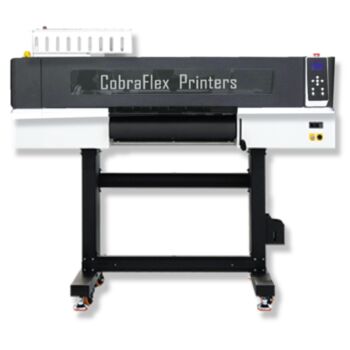
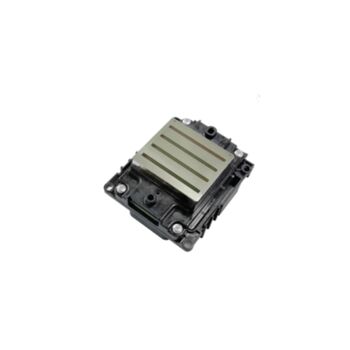
Buckets of Ink proudly offers CobraFlex printers, one of the most advanced DTF printing systems available today. Built with Epson i3200 printheads, CobraFlex printers deliver high-resolution output with exceptional ink control and registration. These printers are engineered for performance, offering automated film feeding, roll-to-roll output, and dual-head configurations for efficient, high-volume production. Whether you're just starting out or scaling your DTF business, CobraFlex offers a reliable, production-ready solution.
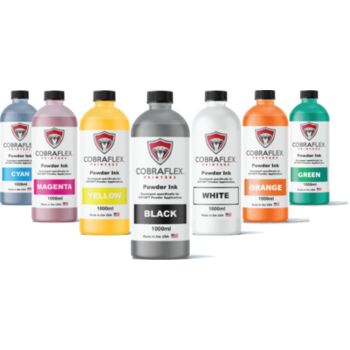
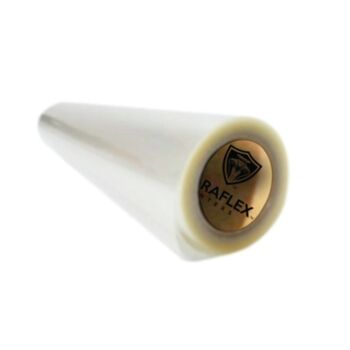
To get the best out of your CobraFlex printer, you need compatible, high-performance consumables—and that’s exactly what CobraFlex offers. CobraFlex inks are made in the USA, formulated for superior adhesion, excellent color density, and smooth printing without clogging. Available in CMYK and White, they provide the vibrant foundation for detailed artwork and soft hand-feel transfers. CobraFlex hot melt adhesive powder ensures strong bonding and elasticity, ideal for garments that require wash resistance and flexibility. The powders are easy to apply, evenly coat the printed image, and work seamlessly with all CobraFlex DTF ink sets. CobraFlex PET films are specially coated to handle rich, full-color artwork while maintaining consistent release performance. With a matte finish and anti-static properties, they minimize smudging and ensure crisp transfers every time.
Expand Your Palette with CobraFlex Color Expanders
CobraFlex also offers a unique line of color expanders to go beyond standard CMYK output. These include Expander Orange and Expander Green, which are perfect for improving color range in complex prints with subtle gradients or bright highlights. In addition, CobraFlex Fluorescent Yellow and Fluorescent Magenta are excellent for creating neon, high-visibility graphics—especially popular in streetwear, sports apparel, and promotional merchandise. Using color expanders allows you to hit specific Pantone shades, boost vibrancy, and create multi-dimensional artwork that stands out. These inks integrate smoothly with CobraFlex’s ink systems and print settings, giving you more creative freedom without sacrificing performance or consistency.
Shop CobraFlex DTF Systems and Supplies
Buckets of Ink is your trusted source for CobraFlex printers, inks, films, and powders. We offer expert support, competitive pricing, and fast delivery on everything you need to power your DTF production. Explore the future of garment decoration with Direct to Film printing and discover how CobraFlex technology can elevate your business.
CobraFlex DTF Printers and DTF Transfer Supplies: Production Grade Systems, Stocked and Supported in the USA
Why Decorators Are Building Their Shops Around DTF Transfers
Ask a decorator why they added a DTF printer and you will hear the same three answers: one setup prints on nearly anything, there is no pretreatment step, and transfers can be produced today and pressed whenever the order lands. A DTF transfer starts as pigment ink on coated PET film, gains a hot melt adhesive layer, and cures into a stable, stretchable print that bonds to cotton, polyester, blends, canvas, and denim under a standard heat press. That flexibility is why shops that once split every job between screens and DTG now route so much of their daily work through DTF, and why we also produce custom DTF transfers for shops that want to start pressing before they invest in a machine.
The CobraFlex DTF Printer Lineup: From First Machine to Full Production
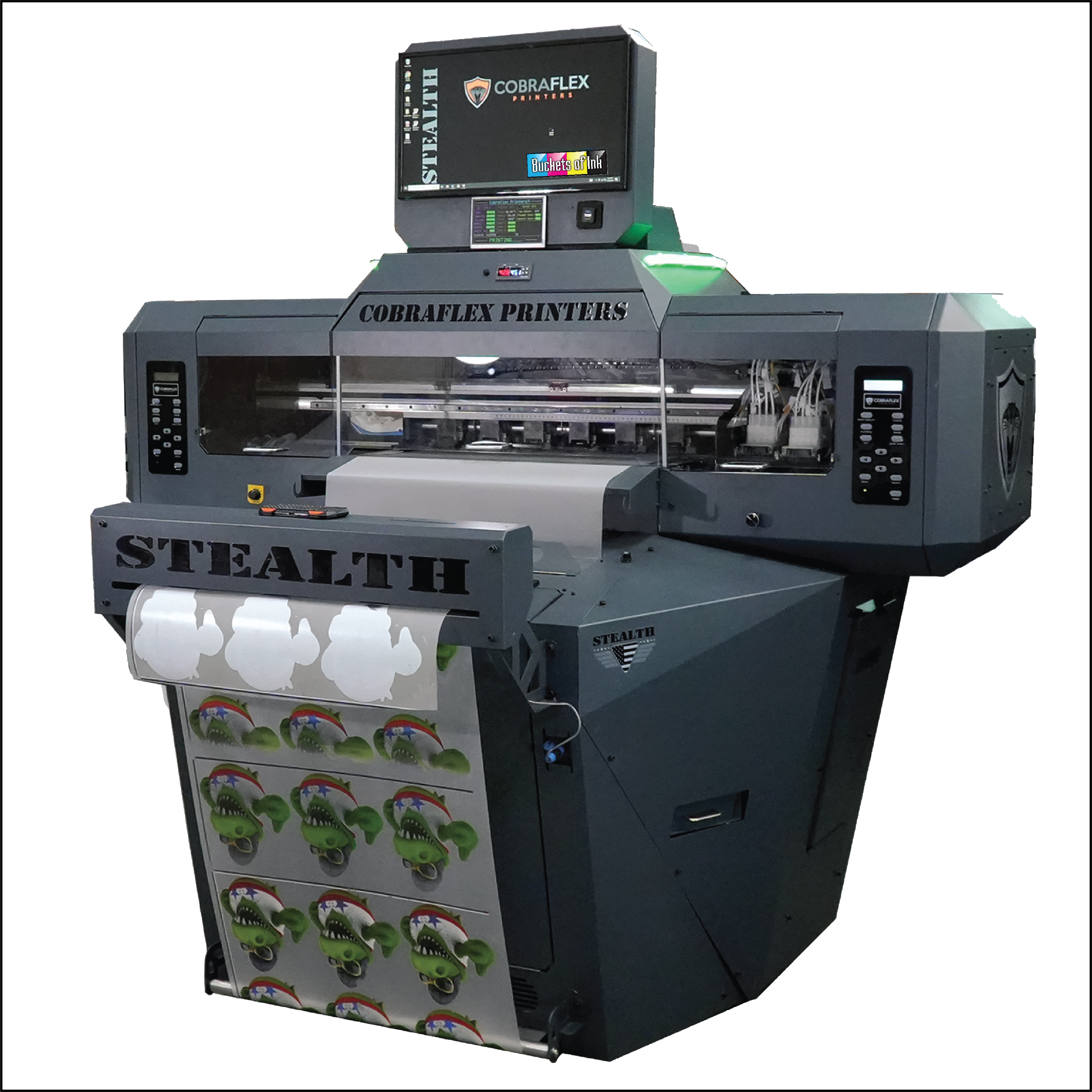
CobraFlex builds its DTF printers around genuine Epson i3200 printheads, and the lineup scales with your order volume. The desktop DTF-T30 runs 13 inch film for shops proving out the business. The 24 inch two head and four head machines add roll to roll film feeding, white ink circulation, and the throughput a daily production schedule demands. At the top of the range, the Stealth series builds the powder shaker dryer directly into the printer, collapsing two machines and a handoff into a single footprint. Compare configurations in our DTF printers catalog, or start with a DTF printer package that bundles the printer, shaker dryer, and starter consumables into one predictable number.
CobraFlex DTF Inks, Powered by DuPont Artistri
Ink chemistry is where DTF systems live or die, and CobraFlex does not treat it as an afterthought. CobraFlex DTF inks are manufactured in the USA on DuPont Artistri pigment chemistry, the same formulation family trusted across industrial textile printing, which is why every CobraFlex ink SKU in our catalog carries a DUP part number. The payoff is dependable jetting through the i3200 nozzle plate, dense color laydown on the film, and a white underbase that stays opaque wash after wash. Read the full story on CobraFlex DTF inks powered by DuPont Artistri, or stock your shop directly from our DTF inks department in CMYK and White.
Go Beyond CMYK with Expander and Fluorescent Inks
Standard CMYK covers most artwork. It does not cover all of it. CobraFlex Expander Orange and Expander Green widen the printable gamut for designs with saturated oranges, deep greens, and hard to hit Pantone targets, while Fluorescent Yellow and Fluorescent Magenta deliver the high visibility neons that streetwear and athletic brands ask for by name. Because the expanders share the same pigment platform as the core set, they drop into an existing CobraFlex ink system without new profiles fighting the hardware. See how decorators are putting the expanded CobraFlex ink lineup to work on real jobs.
Films, Powders, and Parts That Match the Machine
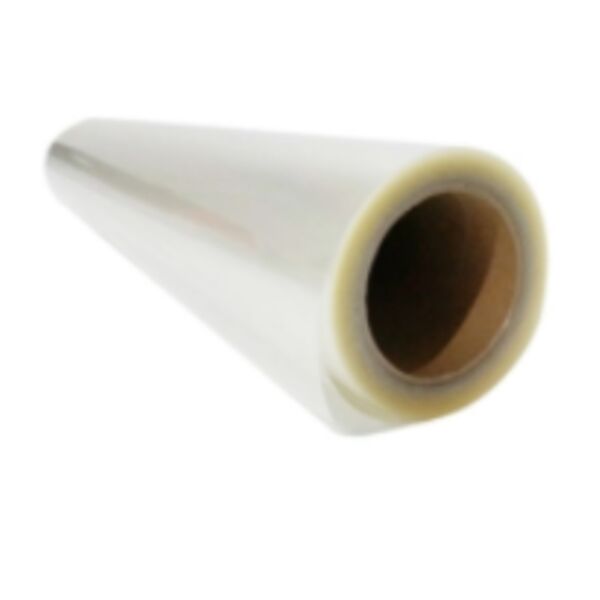
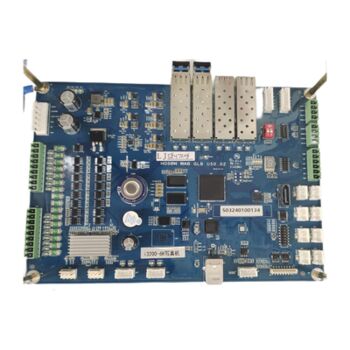
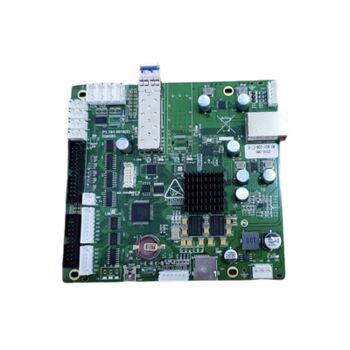
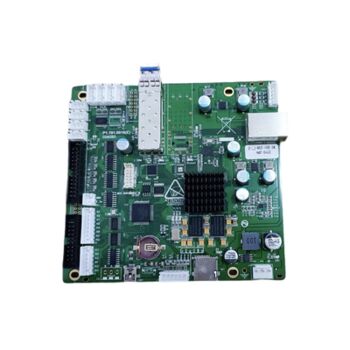
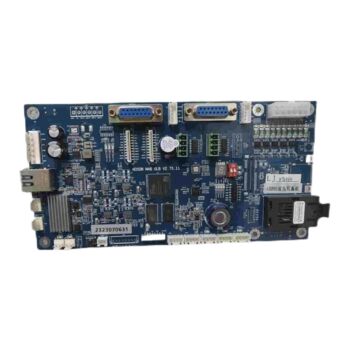
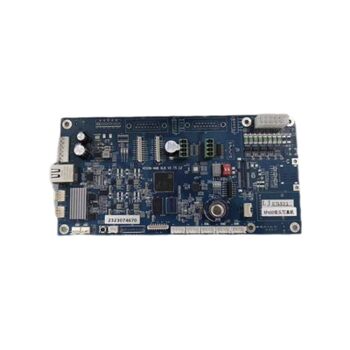
A DTF transfer is a system: ink, film, and powder formulated to release and bond together. CobraFlex matte DTF transfer film carries an anti static coating and consistent release behavior across 13 inch, 24 inch, and 63 inch rolls, and CobraFlex hot melt adhesive powder is milled for even coverage and elastic, wash resistant bonds. Just as important, we stock what keeps machines alive: printheads, capping stations, dampers, pumps, and boards, all on the shelf in our DTF parts department, so a worn component costs you a day instead of a month of production.
Buy Your DTF Equipment from People Who Run It
Buckets of Ink is a stocking CobraFlex distributor headquartered in Tempe, Arizona, shipping nationwide with same day delivery available across the Phoenix metro. The people quoting your machine are the same people who run these printers and answer the phone when a nozzle check goes sideways. Call (480) 229-7806, send a message through our contact page, or stop by the counter at 906 S Priest Dr and talk it through in person before you buy.
The DTF Printing Guide: Supplies, Press Settings, and Shop-Tested Best Practices
Direct to Film printing rewards shops that treat it like a process, not a product. The printer matters, but so do the film on the roll, the mesh of the adhesive powder, the humidity around the ink tank, and the fifteen seconds under the press. This guide collects the settings, supply specs, and shop-tested habits our team shares over the counter every week, so you can print, cure, and press with fewer surprises. Every consumable mentioned below, from DTF pigment inks to PET transfer film, is stocked at our Tempe, Arizona warehouse.
How a DTF Transfer Is Made, Step by Step
Every DTF transfer, whether it comes off a 13 inch desktop unit or a 24 inch four head production machine, moves through the same five stages:
Print. Artwork is mirrored and printed onto coated PET film, color layer first with a white backing layer on top, using water based DTF pigment inks.
Powder. While the ink is still wet, hot melt adhesive powder is applied across the print and the excess is shaken off, leaving powder bonded only to the ink.
Cure. The film passes through a shaker dryer or curing oven at roughly 230 to 250 F (110 to 121 C) until the powder gels into an orange peel texture, typically two to five minutes depending on the equipment.
Press. The cured transfer is positioned on the garment and pressed at 300 to 320 F (149 to 160 C) for 10 to 15 seconds with medium to firm pressure.
Peel and finish. The film is peeled hot or cold depending on its coating, then a second press of 5 to 10 seconds through a finishing sheet flattens the adhesive and improves wash durability.
Cured transfers do not have to be pressed immediately. Shops routinely print a full day of gang sheets, then press against orders as they come in, which is what makes DTF such a strong fit for on demand work.
DTF vs. Screen Printing, DTG, and Sublimation
DTF did not replace the other decoration methods; it filled the gap between them. Here is how the four main garment decoration processes compare in practice:
Method
Best For
Fabric Range
Setup Per Design
Feel
DTF
Full color art, mixed fabric orders, short to medium runs, on demand printing
Cotton, polyester, blends, canvas, denim, and more with no pretreatment
Digital only, no screens
Thin, flexible surface layer
Screen printing
High volume single design runs, spot colors, lowest cost per piece at scale
Primarily cotton and blends
Screens, emulsion, and registration for each color
Soft to heavy depending on ink deposit
DTG
Photographic prints and one offs on cotton
Cotton dominant; darks require pretreatment
Digital, plus a pretreat step
Very soft, ink sits in the fabric
Sublimation
All over prints and hard goods
White or light polyester only
Digital only
No hand at all, dye lives in the fiber
Screen printing still wins on cost per unit for large single design orders, which is why our screen printing supplies counter stays as busy as the DTF side of the shop. And for structured caps, polos, and workwear, embroidery remains the standard. The healthiest decoration businesses we supply run two or three of these methods side by side and route each job to the cheapest process that meets the quality bar.
The DTF Supplies Checklist
A complete DTF workflow needs seven things on the shelf. Run out of any one of them and production stops:
DTF pigment inks in CMYK plus White, kept agitated and within their use by date.
PET transfer film in sheets or rolls, hot peel or cold peel to match your workflow.
A curing unit: a shaker dryer for roll to roll production, or a convection oven for sheet work.
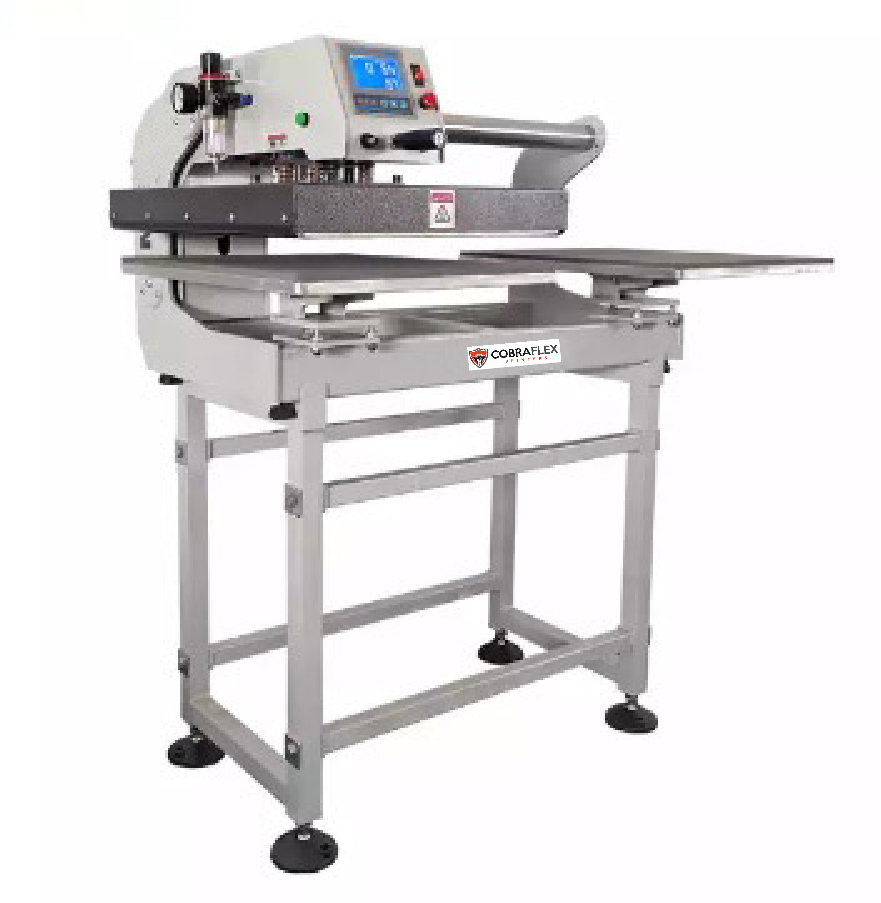
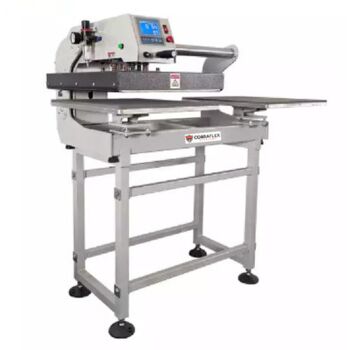
A dependable heat press that holds even temperature and pressure corner to corner.
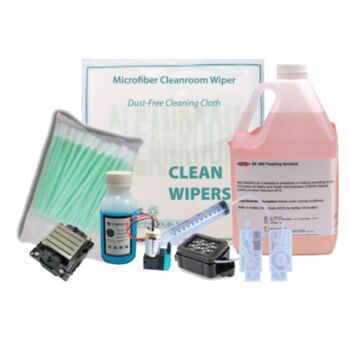
Cleaning supplies: flushing solution, foam swabs, gloves, and lint wipes for daily maintenance.
Air filtration to capture airborne powder and curing fumes in the print room.
Starting from zero? Our DTF printer packages bundle the printer, shaker dryer, and starter consumables so the numbers stay predictable. And if you want to sell prints before you buy a machine, we produce custom DTF transfers from your artwork that you press in house.
Heat Press Settings for DTF Transfers
Most adhesion failures trace back to the press, not the print. Use these settings as starting points and dial in from there:
Fabric
Temperature
Time
Pressure
Notes
Cotton
300 to 320 F (149 to 160 C)
10 to 15 sec
Medium to firm
The standard starting point for most transfers
Polyester and performance wear
270 to 285 F (132 to 141 C)
10 to 12 sec
Medium
Lower heat limits dye migration and scorching
Cotton poly blends
285 to 300 F (141 to 149 C)
10 to 15 sec
Medium
Split the difference and test a blank first
Nylon and coated fabrics
260 to 275 F (127 to 135 C)
8 to 10 sec
Light to medium
Always test; some coatings resist adhesion entirely
The spec sheet that ships with your transfer film outranks any chart, including this one, because film and powder formulations differ. Two habits pay for themselves: verify your platen with temperature strips instead of trusting the readout, and finish every garment with a 5 to 10 second second press through a finishing sheet, which flattens the adhesive, deepens the matte finish, and measurably improves wash performance. If your press cannot hold even pressure corner to corner, fix that before blaming the film.
DTF in a Dry Climate: Humidity Control for Arizona Shops
DTF inks are water based and happiest between roughly 45 and 60 percent relative humidity. Arizona shops rarely see that number indoors; in June, a Tempe print room can sit below 15 percent. Dry air pulls moisture out of the ink at the nozzle plate, and it shows up as banding, deflected nozzles, and white ink starvation.
What actually works in the Valley: run a humidifier next to the printer and keep a hygrometer on the wall so you are managing a number, not a guess. Print a nozzle check at the start of every day, and never let the machine sit idle for a week. Agitate white ink daily, because titanium dioxide settles fast, and let the circulation system run. Keep the capping station wet and clean with flushing solution and foam swabs. Store film sealed with desiccant, since static on bone dry film scatters adhesive powder. Printheads are consumables everywhere, but dry air retires them early; when the time comes, genuine Epson PrecisionCore i3200 printheads and the rest of the replacement components are stocked in our DTF parts department.
Troubleshooting Common DTF Problems
Five issues account for most of the support calls we take. Each has a known fix:
Banding or missing lines in the print. Run a nozzle check first. Clean the capping station and wiper, raise the room humidity, and replace dampers if ink starvation continues.
Powder sticking outside the image. That is ink overspray or static. Reduce ink limits in your RIP, ground the shaker, and keep film sealed until the moment you load it.
Prints cracking after a few washes. Usually too much powder or an over cured film. Shake off the excess and cure only until the powder reaches the orange peel gel stage, not beyond.
Poor adhesion or lifting edges. Pressure too light, temperature too low, or a coated fabric. Verify platen heat with temperature strips, repress with a finishing sheet, and test coated garments before running the order.
Dull or muddy color. Settled or expired ink, the wrong ICC profile, or bargain film. Agitate the ink, reload the correct profile, and print a swatch on film you trust before chasing settings.
Wash Care for Finished DTF Prints
A DTF print is only as durable as the care it receives, so the wash instructions you hand your customer are part of the product. Turn garments inside out and wash cold, skip chlorine bleach and fabric softener, tumble dry low or hang dry, and never iron directly over the print. Professional decorators verify durability with accelerated laundering tests such as the AATCC TM61 standard, which compresses dozens of home washes into a single lab cycle. A correctly pressed transfer on an appropriate fabric routinely clears 50 or more home washes with minimal cracking or fading.
DTF Printing FAQ
How long do DTF transfers last?
With correct press settings, a finishing press, and proper wash care, a DTF transfer routinely survives 50 or more home washes with minimal cracking or fading. Durability depends most on pressing temperature, pressure, and dwell time, which is why decorators test with accelerated laundering methods before committing to large orders.
What temperature and time should I press DTF transfers?
Start at 300 to 320 F for 10 to 15 seconds with medium to firm pressure on cotton, and drop to 270 to 285 F on polyester to limit dye migration. Always follow the spec sheet for your specific film, and finish with a 5 to 10 second second press through a finishing sheet.
Can DTF transfers be applied to polyester, cotton, and blends?
Yes. Working across cotton, polyester, blends, canvas, and denim without pretreatment is the core advantage of DTF over DTG and sublimation. Use lower press temperatures on polyester, and always test nylon or coated fabrics first because some coatings resist adhesion.
How should printed DTF transfers be stored?
Store cured transfers flat or loosely rolled in a sealed bag or bin, in a cool, dry space out of direct sunlight. Stored this way, transfers commonly press well for months, though pressing sooner gives the most consistent adhesion.
Why does DTF white ink need to be shaken or circulated?
White DTF ink carries titanium dioxide pigment, which is heavy and settles quickly. Daily agitation and an active circulation system keep the pigment suspended, which prevents clogged lines, starved nozzles, and weak white underbase coverage.
Does Buckets of Ink deliver DTF supplies in the Phoenix area?
Yes. Buckets of Ink is a stocking distributor at 906 S Priest Dr #101 in Tempe, AZ, with same day delivery available on in-stock supplies across the Phoenix metro area. Call (480) 229-7806 to confirm your route, or order online and pick up at the will call counter.
Whether you are pressing your first transfer or feeding a four head machine around the clock, the fastest answer is usually a phone call. Browse the DTF brands we stock, send a question through our contact page, or call (480) 229-7806 and talk to the people who run these machines every day. We bring the store to your door.
Reviewed by the Buckets of Ink team. Last updated July 2026.