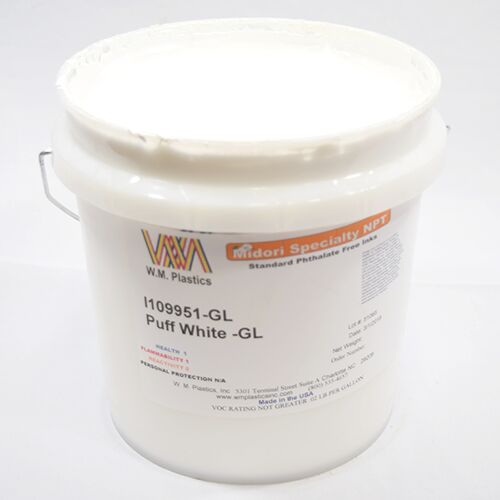
White Puff Ink | Puff Ink Screen Printing Techniques
Understanding White Puff Ink: Texture, Lift, and Precision
White puff ink offers more than visual impact—it's a tactile tool that transforms flat designs into dimensional statements. Ideal for bold prints, lettering, and standout branding, puff ink screen printing expands when exposed to heat, forming a raised, foam-like texture. But achieving optimal puff results requires more than just heat—it's about controlling the stencil, emulsion thickness, and application method with precision.
Why Emulsion Thickness Matters in Puff Printing
Stencil thickness plays a direct role in determining how much ink is deposited on the substrate. Puff ink reacts to volume, so a thicker ink layer results in more dramatic puffing. That’s where your emulsion setup becomes critical. Using a high stencil build—typically created with dual-coat or capillary film techniques—enables greater ink deposit. When cured correctly, this additional volume activates the puffing agent more aggressively, producing a bolder, fuller 3D print.
Controlling Puff Ink Results Through Mesh and Stencil Strategy
Mesh count and emulsion thickness work in tandem. Lower mesh counts like 86–110 allow heavier ink deposits, which is essential for plastisol puff ink to rise fully. However, without an adequate stencil build, even low mesh won’t deliver enough volume. Use thick emulsion layers or multiple coats to increase stencil height. This ensures the white puff ink has sufficient mass to expand visibly without creating overly soft or muddy prints.
Proper Curing: Unlocking Full Puff Expansion
White puff ink requires controlled curing at 320°F. Under-curing will prevent full expansion, while over-curing may burn or flatten the puff. Use a forced air conveyor dryer to maintain consistent temperature across the print surface. Allow for slower belt speeds to give the ink time to rise, particularly in large or heavily puffed designs. Pre-curing with a flash unit is not recommended, as it may begin activating the puff agent too early, creating uneven textures or loss of edge definition.
Application Tips for Clean, Bold White Puff Prints
When printing with white puff plastisol ink, avoid excessive pressure on the squeegee stroke. Let the ink flood the screen and deposit gently. Over-compression flattens the ink and compromises puff lift. Choose bold graphics with defined edges—thin lines and fine detail do not puff evenly and often lose shape during curing. Always test your stencil, off-contact, and squeegee setup with sample runs before full production to dial in ideal expansion.
Elevate Your Prints with White Puff Ink
White puff ink opens new creative doors in screen printing, but only when applied with precision. Emulsion and stencil thickness aren't just setup details—they're the foundation for a clean, high-lift puff print. By understanding the mechanics of puff expansion and controlling each variable—from mesh selection to dryer temps—you can produce textured prints that stand above the rest. At Buckets of Ink, we supply screen printers with premium puff formulations, emulsion systems, and training to master this specialty technique.