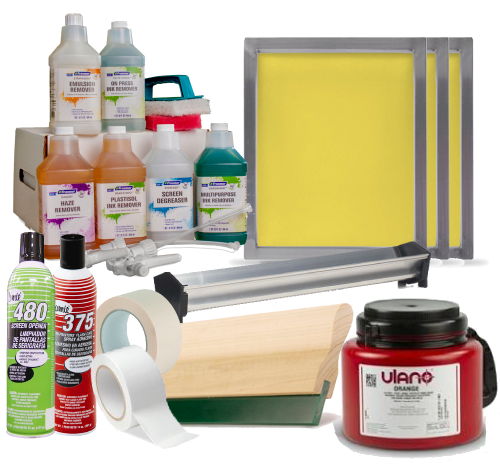

Keep presses running on schedule with dependable Wilflex plastisol inks, proven emulsions, dimensional mesh & screens, squeegees, blockout, tapes, pallet adhesives, and full reclaim chemistry—in stock for rapid fulfillment in Las Vegas. Our online sales checkout and great shipping rates help you meet tight timelines for resort merch, event pop-ups, team uniforms, schools, and corporate programs across the Valley.
Use Epic Rio to secure high-opacity spot colors and predictable cure on cotton and blends. Balanced rheology keeps small type sharp, resists fibrillation on ringspun tees, and flashes fast without over-gelling. For brand accuracy, rely on mixing bases and formula libraries to hit corporate hues across tees, fleece, and performance garments. Expand effects with puff, suede, shimmer, metallic, and fluorescents—upselling retail value without destroying cycle time.
Control migration on athletic polyester with low-bleed whites/grays and disciplined flash dwell. Verify belt temperature with a surface probe at garment level (not just the display), and stage flash/print sequences to avoid over-baking an underbase. On first articles, apply a stretch/return test to confirm cure; five minutes of garment cool-down before testing prevents false fails from residual heat. Document your “golden” settings per garment class so night shifts and event rushes behave consistently.
Choose dual-cure when you want a forgiving exposure window and solvent resistance in reclaim. Pick fast photopolymer to accelerate cycle time on LED units. Target EOM (emulsion over mesh) to control deposit and edge integrity—thicker profiles for bold whites and blockers; thinner profiles for halftone finesse. Coat 1/1, 2/1, or 2/2 depending on image density and substrate. Calibrate exposure using a 21-step wedge; many dual-cures hit steps 7–9 with modern LED panels, while pure photopolymer exposes faster and demands tighter timing.
If highlight dots disappear, try reducing exposure; if the stencil feels soft, increase time slightly. Sawtoothing and ragged edges often begin in prepress: check film positives for banding, low resolution, or ink pooling. Re-run exposure tests after bulb or panel changes and log results at the unit. Predictable stencils reduce setup time and protect rerun consistency during peak show and tournament seasons.
Stock 110–135 mesh for coverage and underbases, 156–180 for detail, and 200–230 for halftones and microtype. For simulated process, pair mesh with sensible LPI (e.g., 55–85) and staggered angles to avoid moiré with the mesh knuckle. Pre-press with even tension and label frames with last Newton readings; a few N of drift during long runs can push micro-registration off by a hair—right where brand marks are most visible.
Reclaim methodically: degrease → stencil removal → dehaze → final rinse. Balanced chemistry extends mesh life, reduces haze that telegraphs through whites, and keeps registration predictable from rerun to rerun. Dry screens thoroughly before recoating to prevent fish-eyes and voids. Keep dust, lint, and static under control; pinholes and debris are the #1 time-sink during approvals.
Sharp blades and the right durometer control edge quality and deposit. 70–75 duro is a reliable generalist; 60/90/60 triple-duro stabilizes underbases, and 75/95/75 helps with fine detail. Maintain an attack angle around 15–20° with even pressure—excess pressure smears edges and drives ink into fibers rather than across the stencil. Clean flood bars to avoid streaking; dried ink scraps drag halftone dots into unwanted places. Verify off-contact and pallet level to keep squeegee deflection consistent across the platen.
Choose residue-free frame tapes and blockouts that withstand reclaim. Label roll widths and adhesive strengths so the right tape goes in the right place—mid-run lifts are costly. Pallet tape protects rubber and speeds turnarounds; swap regularly to maintain even tack. Use spray adhesive with light, even coats; heavy application gums fibers and hurts hand. For delicate triblends, consider water-based adhesive rolls to preserve surface feel and reduce lint transfer.
Adopt low-odor, low-VOC cleaners when possible, capture solids from rinse steps, and keep PPE consistent at dip tanks, washout, and dryer outfeeds. Label containers clearly and maintain SDS binders; clean processes save time during audits and protect crews. On press, use shop towels that don’t shed; microfiber or tight-weave cotton prevents lint-related pinholes that only show up after exposure or the first flash.
Start with on-screen proofs, then pull press checks under consistent light so clients know what they’ll receive. Archive swatches and attach exposure times, mesh counts, and cure profiles to each job ticket. During production, log belt temperature, dwell time, and humidity—desert swings between day and night in Las Vegas can change print behavior. QC with stretch tests, spectro checks on brand colors, and quick wash tests for new garments or special effects.
We ship quickly across Las Vegas, Paradise, Spring Valley, North Las Vegas, Sunrise Manor, Enterprise, and Henderson. When calendars compress—conventions, festivals, playoffs—request split shipments: approvals first (ink quarts, short mesh packs, sample screens), then release gallons, full cases, and fresh squeegees once prints are locked. This protects press time and reduces rework under pressure.
Use our catalog to verify live stock on inks, emulsions & screens, pressroom tools, reclaim chemistry, and compliance-friendly cleaners. We’ll help map mesh/LPI, underbase selection, flash dwell, and belt temps to your garment mix—and document a repeatable recipe so any operator on any shift can replicate quality.
Core screen printing supplies include plastisol inks, emulsions, mesh/screens, squeegees, tapes, pallet adhesive, and reclaim chemistry. Coat/expose a stencil, align screens, deposit ink with a sharp squeegee, then gel/fully cure. Balanced mesh counts and LED-matched emulsions keep edges crisp and color accurate for durable prints.
Start with high-opacity Wilflex plastisol inks, LED-friendly emulsions, a mesh set from 110–230, sharp squeegees, residue-free tapes, and reliable reclaim chemistry. These staples keep setups fast, edges crisp, and cure repeatable—so you can hit deadlines with in-stock items and great shipping rates.
Lock coverage with Epic Rio whites/colors, then use additives (soft-hand, stretch, puff, shimmer, fluorescents) to raise ticket value. Target EOM for the image: thicker for blockers/underbases, thinner for halftones. Keep reclaim standardized (degrease → strip → dehaze → final rinse) to extend mesh life and preserve registration across reruns. Pallet tape, clean flood bars, and correct off-contact stop smears and fibrillation.
Order from our screen printing supplies catalog—everything is designed for speed and consistency, in stock & ready to ship. We route with excellent rates into Las Vegas, Paradise, Spring Valley, and North Las Vegas, with split-ship options (approvals first, then bulk) when schedules compress.Order from our supplies catalog—in stock & ready to ship. Add Wilflex Epic Rio for coverage, and standardize reclaim (degrease → strip → dehaze) to protect mesh life and registration on reruns.
Which plastisol inks give the best coverage and color pop?
Epic Rio delivers high opacity, smooth lay, and predictable cure on cotton and blends.
How do I choose emulsions for LED units?
Dual-cure for latitude; photopolymers for speed. Match 365–405 nm and set EOM for edge quality.
Which mesh counts cover most jobs?
110–135 (coverage), 156–180 (detail), 200–230 (halftones/microtype).
How do I reduce haze/pinholes?
Consistent degrease, dust control, full dry, and balanced dehaze.
What is plastisol ink?
Heat-cured, high-opacity ink film with vivid color and strong wash durability.
Do you stock Wilflex plastisol inks for Las Vegas shops?
Yes—Wilflex Epic Rio and specialty lines are in stock with great shipping rates across Las Vegas, Paradise, Spring Valley, and North Las Vegas.
Which emulsions work best with LED exposure units?
Fast photopolymers speed cycles; dual-cures add latitude. We’ll set exposure with a 21-step wedge and verify highlight retention and edge quality.
What mesh counts should I keep on hand?
110–135 for coverage/underbases, 156–180 for detail, 200–230 for halftones. Pair sensible LPI/angles to avoid moiré.
How can I reduce pinholes and haze?
Consistent degrease, dust control, and full dry before coating; balanced dehaze removes ghosting without weakening mesh.
Do you offer fast delivery and split shipments?
Absolutely—approvals first, then production volumes, all routed with great shipping rates to your Las Vegas address.